From the blog
Electric vs. Manual Toothbrush: What Dentists Actually Recommend
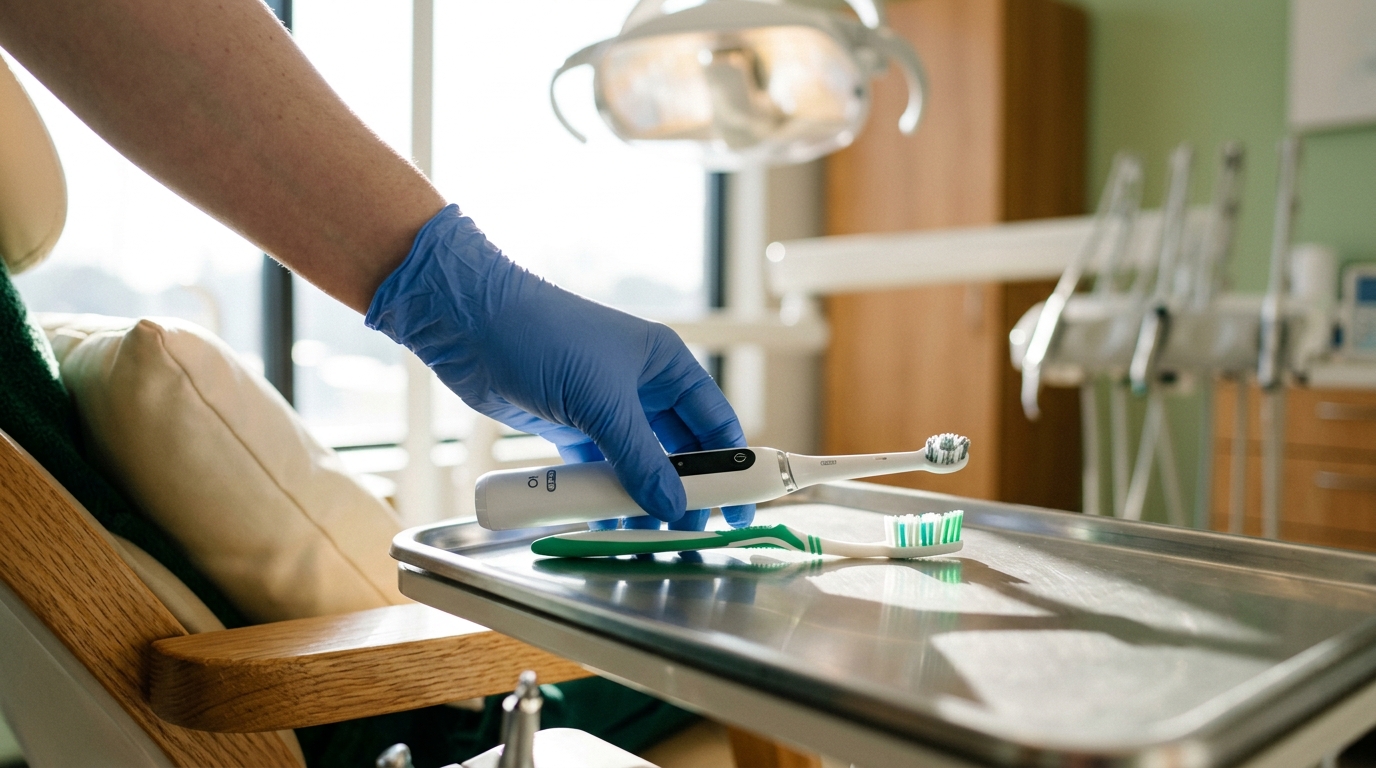
Dentists recommend electric toothbrushes for most adults, particularly oscillating-rotating models like Oral-B's iO Series, citing a measurable edge in plaque removal and gum health - but a manual brush used with proper technique still delivers clinically acceptable results for disciplined brushers.
That's the honest answer. Everything below unpacks the evidence, the exceptions, and how to pick the right tool for your actual life - not a dental school ideal.
The Clinical Evidence in Plain Language
A 2023 Cochrane Review - the gold standard of systematic research - analyzed 56 trials covering over 5,000 participants and found that oscillating-rotating electric toothbrushes reduced plaque by 21% more and gingivitis by 11% more than manual brushes over the short term. Those aren't trivial margins when gingivitis is the precursor to periodontitis, the leading cause of adult tooth loss.
Sonic toothbrushes (like the Philips Sonicare DiamondClean) performed comparably to oscillating models in most metrics, though the oscillating-rotating category holds a slight edge in independent head-to-head tests. The mechanism matters: electric brushes deliver 8,000–40,000 brush strokes per minute versus roughly 300 per minute for a manual brush. Consistency, not just speed, is the real differentiator - the brush does the work even when your technique isn't perfect.
Where Manual Brushes Hold Their Own
Manual toothbrushes aren't obsolete. For people with excellent technique - meaning a 45-degree angle to the gumline, two full minutes, and systematic coverage of every tooth surface - a quality manual brush like the Colgate 360 or Oral-B Pro-Health achieves plaque removal scores within statistical noise of an electric brush.
Manual brushes also win on:
- Cost: A good manual brush costs $3–6 and should be replaced every 3 months. Entry-level electric brush heads cost $5–12 each and require a $30–$300 handle upfront.
- Travel: No charging cables, no battery anxiety, no TSA concerns about lithium batteries in checked luggage.
- Simplicity for children: Teaching a child the correct manual brushing motion builds foundational habits that transfer lifelong.
- Accessibility: For people with sensory sensitivities (common in autism spectrum conditions), the vibration and noise of an electric brush can be a genuine barrier to brushing at all - making a manual brush the functionally superior tool.
Electric vs. Manual Toothbrush: 6-Point Comparison
Factor Electric Toothbrush Manual Toothbrush Plaque Removal 21% better (Cochrane, 2023) Adequate with good technique Gum Health 11% less gingivitis Comparable with proper angle Upfront Cost $30–$300 $3–$10 Ongoing Cost $20–$50/year (replacement heads) $12–$24/year (4 brushes) Ease of Use High - guides the user Requires trained technique Best For Most adults, braces, arthritis, gum disease risk Diligent brushers, travelers, budget-conscious, sensory-sensitive usersWho Should Definitely Use an Electric Toothbrush
Certain groups see disproportionate benefit from switching to electric:
- People with orthodontic appliances. Braces create dozens of hard-to-clean surfaces. Oscillating-rotating brushes navigate brackets and wires significantly better than manual strokes.
- Adults with limited dexterity. Arthritis, Parkinson's disease, or post-stroke motor limitations make the consistent circular motion of a manual brush difficult. An electric brush compensates directly.
- Anyone with a history of gum disease. Periodontitis patients need superior plaque control at the gumline. The 11% gingivitis reduction from electric brushes translates to real clinical outcomes at recall appointments.
- People who rush. Most adults brush for under 60 seconds when using a manual brush. Most electric toothbrushes include a 2-minute built-in timer with 30-second quadrant alerts, which measurably increases brush time.
- Children who resist brushing. Many kids engage more consistently with electric brushes because they feel different and often come with gamified app integrations (Oral-B's app connects to the iO Series for real-time coaching).
Choosing the Right Electric Toothbrush
Not all electric toothbrushes perform equally. Three categories dominate the market:
- Oscillating-Rotating (e.g., Oral-B iO Series 4, 7, 9): The most evidence-backed type. The round head spins back and forth and lifts plaque away. The iO Series 9 adds AI pressure sensing and micro-vibrations at 8,800 oscillations per minute.
- Sonic (e.g., Philips Sonicare ProtectiveClean 6100, DiamondClean 9000): Operates at 31,000 brush strokes per minute. The fluid dynamics created by sonic speed also reach slightly beyond where bristles physically touch - a genuine advantage in interproximal spaces.
- Ultrasonic: A niche category operating above 20 kHz. Currently available primarily in professional settings rather than consumer products, and not substantially better than sonic for home use.
For most people buying their first electric toothbrush, the Oral-B iO Series 4 (roughly $60–$80) or the Philips Sonicare ProtectiveClean 5100 (roughly $70–$90) delivers the clinically validated benefits without paying for premium smart features that don't improve oral health outcomes in trials.
The Technique Factor: What Neither Brush Can Fix
Neither brush replaces flossing. Full stop. Toothbrushes - electric or manual - clean the flat and biting surfaces of teeth. They do not clean between teeth, where roughly 35% of each tooth's surface lives. Interdental cleaning (floss, water flosser, or interdental brushes) is non-negotiable regardless of which toothbrush you use.
Brushing pressure is also critical. Pressing too hard with an electric brush - especially sonic models - can cause gum recession faster than a manual brush, because the vibration amplifies abrasive force. Look for models with pressure sensors that alert you when you're bearing down too hard. The Oral-B iO Series and Philips Sonicare DiamondClean 9000 both include this feature.
The Dentist's Bottom Line
The American Dental Association endorses both electric and manual toothbrushes as effective. But individual dentists - particularly periodontists - skew heavily toward recommending oscillating-rotating electric brushes for patients who present with any plaque-related issues, which is most adult patients. The brush that gets used consistently and correctly is always better than the superior brush sitting on the counter.
If you'll genuinely brush for two full minutes twice a day with perfect technique, a manual brush is fine. If you're human, an electric brush closes the gap between your intention and your execution.
Electric Vs Manual Toothbrush FAQ
Do dentists actually recommend electric toothbrushes, or is that just marketing?
Most dentists do recommend electric toothbrushes, particularly oscillating-rotating models, based on clinical evidence. A 2023 Cochrane Review of 56 trials confirmed electric brushes remove 21% more plaque and reduce gingivitis by 11% compared to manual brushes. The recommendation is evidence-driven, not industry-sponsored preference.
Is a $30 electric toothbrush as effective as a $200 one?
For most users, yes. The core oscillating or sonic mechanism in budget models like the Oral-B Pro 1000 performs comparably to premium models in plaque removal trials. Premium brushes add features like AI coaching, pressure sensors, multiple modes, and Bluetooth connectivity - useful for some users, but not clinically necessary for healthy adults.
How often should you replace a toothbrush or brush head?
Every 3 months, or sooner if bristles are visibly frayed. Worn bristles lose up to 30% of their cleaning effectiveness. Most electric brush heads include color-indicator bristles that fade to signal replacement time.
Can children use electric toothbrushes?
Yes - children 3 and older can use electric toothbrushes designed for their age group. Brands like Oral-B and Sonicare make child-specific models with smaller heads and lower vibration intensity. Adult supervision is still recommended until around age 7–8, when children develop the motor skills to brush independently.
Does an electric toothbrush damage enamel or gums?
Only if used with excessive pressure. Electric toothbrushes should be guided gently along the gumline - the motor does the scrubbing work. Models with built-in pressure sensors actively prevent over-brushing. When used correctly, electric brushes are no more abrasive to enamel than manual brushes used with proper technique.


