From the blog
Everything You Need to Know About Dental Implants
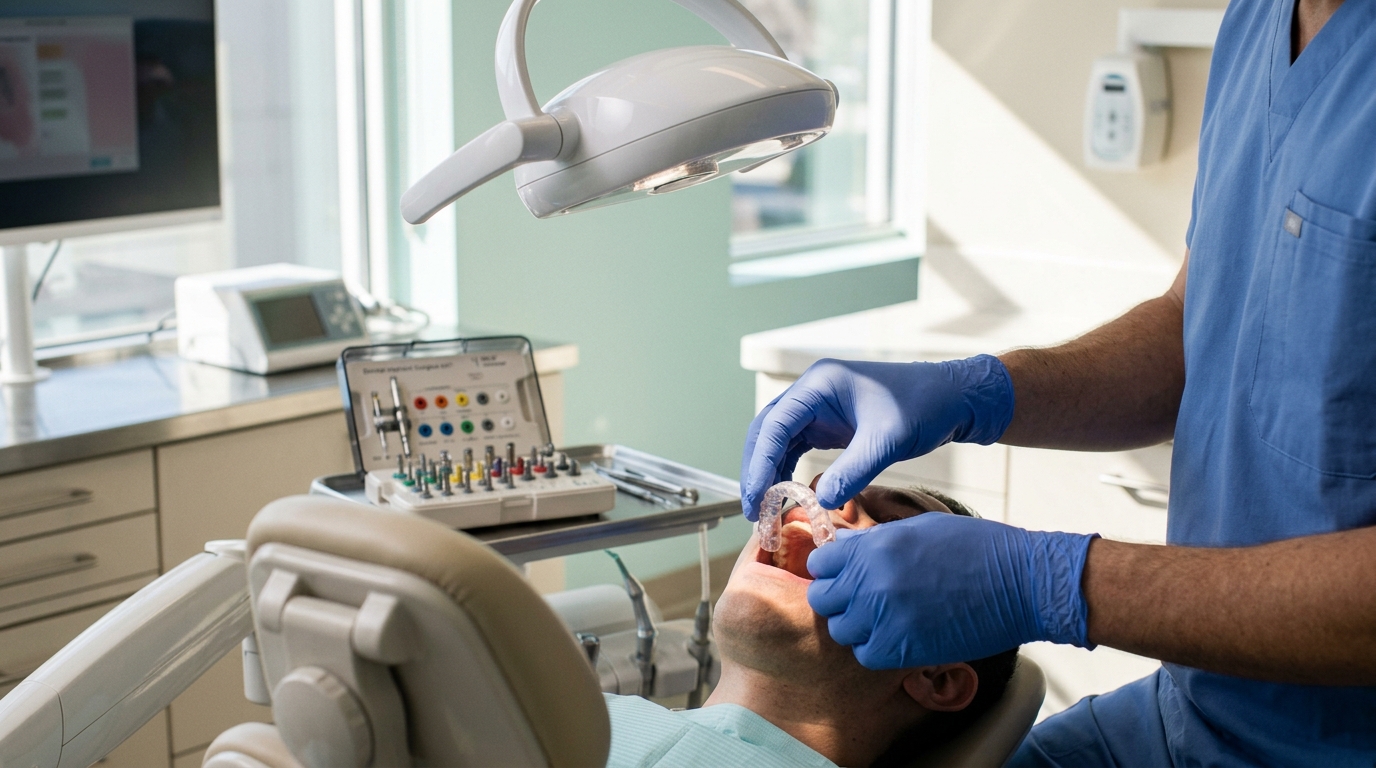
Dental implants are titanium posts surgically placed into the jawbone to serve as artificial tooth roots, supporting crowns, bridges, or dentures. They are the gold standard for replacing missing teeth, with clinical success rates consistently reported above 95% over 10-year follow-up periods.
Whether you've just lost a tooth or have been living with a gap for years, implants offer a permanent, bone-preserving solution that no other tooth replacement option matches. Here's everything you need to know before you sit in the chair.
How Dental Implants Work
An implant system has three distinct components:
- The implant fixture- A titanium or zirconia screw (typically 3.5–6 mm in diameter, 8–16 mm in length) anchored directly into the jawbone.
- The abutment- A connector piece that attaches to the top of the fixture and protrudes just above the gumline.
- The crown, bridge, or denture- The visible prosthetic tooth or teeth secured to the abutment.
Once the fixture is placed, a biological process called osseointegration occurs - the surrounding bone fuses directly to the titanium surface over roughly 3 to 6 months. This fusion is what gives implants their exceptional stability and longevity.
Types of Dental Implants
Not all implants are the same. Your oral surgeon or implant dentist will recommend a type based on your bone volume, health history, and how many teeth need replacing.
- Endosteal implants- Placed directly into the jawbone. The most common type, suitable for most patients with adequate bone density.
- Subperiosteal implants- Placed under the gum but above the jawbone. Used when bone height is insufficient and bone grafting isn't viable.
- Zygomatic implants- Anchored into the cheekbone (zygoma) rather than the jaw. Reserved for patients with severe upper jaw bone loss.
- Mini implants- Narrower diameter fixtures (under 3 mm), often used to stabilize lower dentures or in sites with limited space.
- All-on-4 / All-on-6- Four or six strategically angled implants support a full arch of teeth, often loaded with a temporary prosthetic the same day as surgery.
Dental Implants vs. Other Tooth Replacement Options
Feature Dental Implants Fixed Bridge Removable Dentures Bone preservation Yes - stimulates bone No No Adjacent teeth affected No Yes - must be ground down Minimal Lifespan 20+ years (fixture); 10–15 years (crown) 10–15 years 5–10 years Feel and function Closest to natural teeth Good Variable; can slip Maintenance Brush and floss normally Floss threaders required Daily removal and soakingThe Dental Implant Procedure: Step by Step
The process from consultation to final crown typically spans 4 to 9 months. Here's what that timeline looks like:
- Consultation and imaging- Your dentist takes 3D cone beam CT scans to assess bone volume, nerve position, and sinus proximity. A full treatment plan is mapped before anything begins.
- Preparatory procedures (if needed)- Bone grafting, sinus lifts, or tooth extractions may be completed 3–6 months before implant placement to build adequate foundation.
- Implant fixture placement- Under local anesthesia (sedation available), the titanium post is inserted into a precisely drilled channel in the bone. The procedure itself takes 30–90 minutes per implant.
- Osseointegration- A healing period of 3–6 months follows. A temporary crown or healing cap protects the site.
- Abutment placement- Once integration is confirmed, the abutment is attached. Gum tissue heals around it over 2–4 weeks.
- Final crown delivery- A custom-fabricated porcelain or zirconia crown is permanently cemented or screwed onto the abutment.
Who Is a Good Candidate?
Most healthy adults are candidates for dental implants. The ideal candidate has:
- Sufficient jawbone density and height to anchor the fixture
- Healthy gums with no active periodontal disease
- No uncontrolled systemic conditions (e.g., unmanaged diabetes or autoimmune disorders)
- A commitment to oral hygiene and regular dental visits
Conditions that require extra evaluation - but don't automatically disqualify you - include smoking, controlled diabetes, osteoporosis managed with bisphosphonates, and a history of head and neck radiation. Discuss every medication and health condition candidly with your implant provider.
Risks and Complications
Dental implants are safe, but no surgical procedure is risk-free. Documented complication rates include:
- Implant failure (early or late)- Affects approximately 2–5% of implants in healthy patients; higher in smokers.
- Peri-implantitis- A bacterial infection of the tissue surrounding the implant, affecting an estimated 10–20% of implant sites at some point. Treated with professional cleaning and, in severe cases, surgical intervention.
- Nerve or sinus involvement- Rare when proper imaging guides placement; rates under 1% in experienced hands.
- Crown fracture or loosening- The prosthetic component, not the fixture, is the most commonly replaced part over a decade of use.
Cost of Dental Implants
A single implant - fixture, abutment, and crown - ranges from approximately $3,000 to $6,000 in the United States as of 2026, depending on the complexity of the case, geographic location, and whether preparatory procedures like bone grafting are needed. Full-arch All-on-4 treatment typically ranges from $20,000 to $35,000 per arch.
Most standard dental insurance plans still classify implants as cosmetic and provide limited or no coverage. However, some premium PPO plans now cover a portion of the implant crown. Dental savings plans, in-house financing, and CareCredit are widely used alternatives.
How to Care for Your Implant
Implants don't decay, but the surrounding gum and bone absolutely can deteriorate without proper care. Maintain your implant with:
- Twice-daily brushing with a soft-bristle or electric toothbrush
- Daily flossing with implant-specific floss or a water flosser
- Twice-yearly professional cleanings using non-abrasive instruments
- Avoiding chewing ice, hard candies, or non-food objects that stress the crown
- Wearing a nightguard if you grind your teeth (bruxism significantly increases crown fracture risk)
Dental Implants FAQ
How long do dental implants last?
The titanium fixture itself can last a lifetime when properly placed and maintained - many implants placed in the 1980s are still functioning. The porcelain or zirconia crown typically lasts 10–15 years before needing replacement due to normal wear.
Does the dental implant procedure hurt?
The surgery is performed under local anesthesia, so you feel pressure but not pain during the procedure. Post-operative soreness for 3–5 days is normal and managed with over-the-counter NSAIDs like ibuprofen or prescribed pain medication. Most patients rate discomfort as milder than expected.
Can dental implants fail, and what happens if they do?
Yes, implants can fail, most commonly due to infection, insufficient osseointegration, or uncontrolled systemic disease. If a fixture fails, it is removed, the site is allowed to heal, bone is grafted if needed, and a new implant is placed. The second attempt succeeds in the majority of cases.
Is bone grafting always required before getting an implant?
No. Bone grafting is only necessary when there is insufficient bone volume or density at the implant site. Many patients proceed directly to implant placement without any grafting. A cone beam CT scan at your consultation determines whether grafting is needed before any planning begins.
Are dental implants safe for older adults?
Age alone is not a contraindication. Patients in their 70s and 80s receive successful implants regularly. The critical factors are bone quality, overall health, and medication review - particularly bisphosphonates used for osteoporosis, which require careful risk assessment before implant surgery.


